
The FCC says live captions should be "as accurate as possible." But what does that actually mean?
Picture this: You're watching a live news broadcast about a breaking story. The anchor is speaking rapidly, guests are talking over each other, and the live captions are struggling to keep up. "President Trump" becomes "resident ump." "Federal Reserve" turns into "fed up on deserve." Maybe someone says, “inflation ticked up to 3.7 percent” but it appears on your screen as "three point Simpson per cent."
For the 48 million Americans who are deaf or hard of hearing, this isn't just an occasional annoyance. It's the difference between being informed and being left out.
Yet here's the strange thing: The Federal Communications Commission (FCC), which regulates television captioning in the United States, has never actually told broadcasters or streaming platforms exactly how accurate those captions need to be. Not in terms of a hard number, anyway.
“The FCC has been very loathe to mandate quality levels for live captioning,” says Joel Snyder, president of Audio Description Associates and author of The Visual Made Verbal: A Comprehensive Training Manual and Guide to the History and Applications of Audio Description.
From "Better Than Nothing" to 99%
According to a source who used to work in captioning, the original question of captions was: “Are we getting the meaning right?” That was the key concern. And accuracy was based on content.
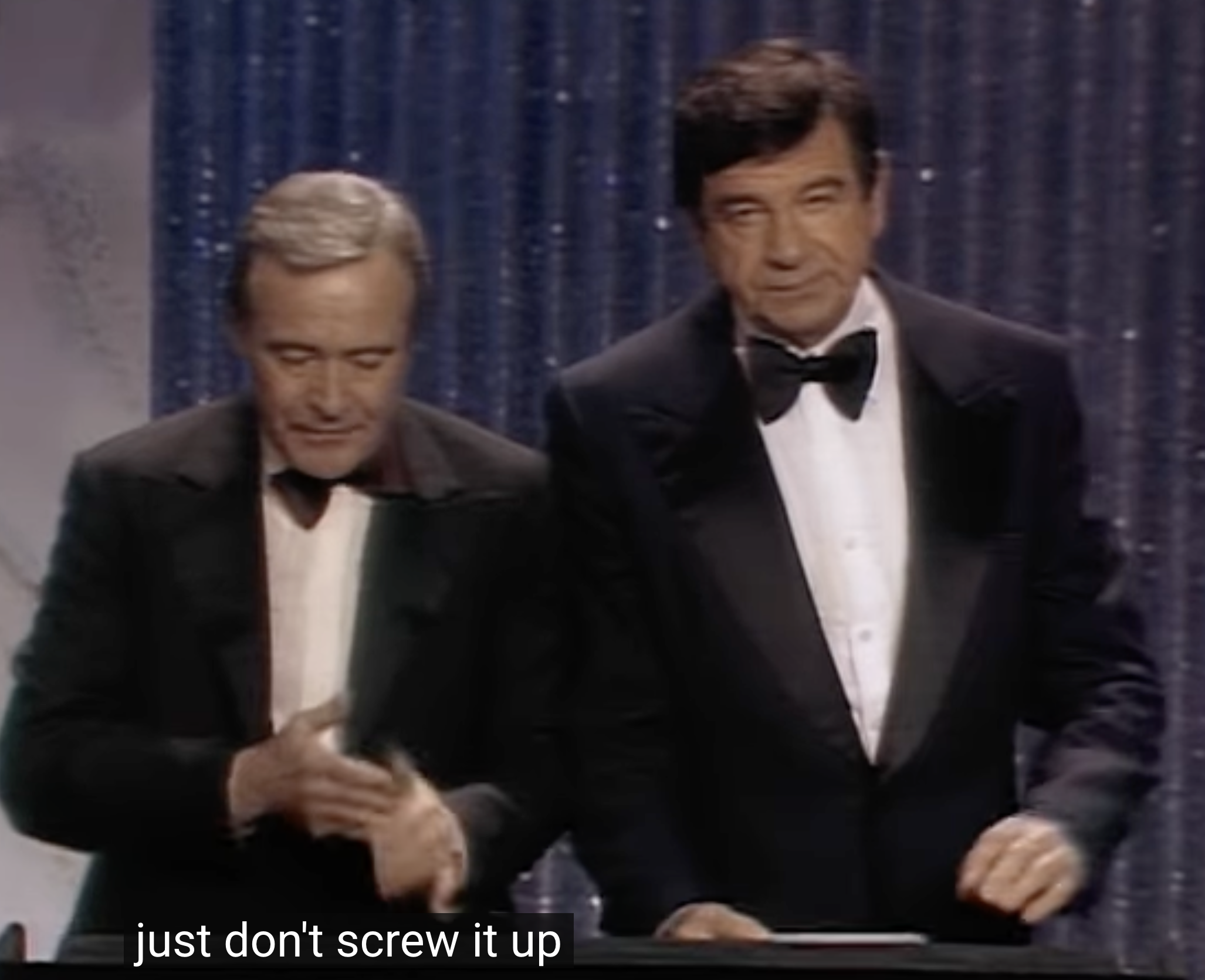
And when live captioning came along in 1982 (the National Captioning Institute (NCI) provided the first real-time captioning at the Academy Awards), getting any captions at all was considered a win. The audience was tolerant because it was better than nothing.
But with technological advances, now according to the National Court Reporters Association (NCRA), “realtime captioning is considered to have met the accuracy guideline if after review it is determined that the captions meet a minimum accuracy level of 98%.” In fact, the accuracy rate of 98% is considered entry-level, with the actual goal being above 99%.
Where the Rubber Meets the Word
The FCC requires that captions for video programming meet four quality standards: accuracy, synchronicity, completeness, and placement. Accuracy is first on the list, but the agency describes it with the kind of regulatory vagueness that drives engineers crazy. Live captions, the rules say, should be "as accurate as possible given the live nature of the programming."
What does "as accurate as possible" mean when you're a caption provider bidding on a contract? What does it mean when you're a streaming service trying to avoid a lawsuit? What does it mean when you're a Deaf viewer trying to follow along with a presidential debate?
The industry has essentially answered this question for itself. Most caption providers aim for 98 to 99 percent accuracy on pre-recorded content — the stuff that's scripted, edited, and relatively easy to caption. For live content, the unofficial target is between 95 to 99 percent, though that number can slip during breaking news, sports, or anything involving multiple speakers talking simultaneously.
“Ninety-five percent sounds pretty good until you do the math," says Snyder, "In a 30-minute news program, that could mean dozens of errors. And it only takes one critical error to completely change the meaning of what's being said. For offline captioning or pre-recorded captions, there’s no reason why accuracy shouldn’t be 100%. For live captions on broadcast or streaming, accuracy rates should hit 99%.”
Courting AI
The FCC's flexibility might seem reasonable. After all, captioning a live sports event where announcers are shouting over crowd noise is genuinely harder than captioning a sitcom filmed months ago. But the lack of a specific percentage has created a legal gray area that's been tested in courtrooms and settlement agreements.
Luckily, some disability rights lawsuits have resulted in consent decrees that establish 99 percent accuracy as the benchmark, effectively creating a legal compliance standard for captioning. One of the most prominent cases to set the 99% stake in the ground was the 2019 case, National Association of the Deaf (NAD) v. Harvard University. In that decision, “For any other live streamed event of high interest, Harvard will consider requests for industry-standard live captioning,” which for providers like Ava, now peg at 99% accuracy.
It should come as no shock that the captioning landscape is shifting rapidly. Automated speech recognition (ASR) technology has improved dramatically in recent years, with AI-powered systems now capable of real-time transcription that can approach but not meet human stenographers. That’s why a hybrid approach of AI + human captioner is able to meet the live accuracy standard of 99%.
Humans improve AI accuracy to the standard and also do what AI cannot master, which is account for context, especially when conditions aren’t controlled with clear audio and standard American English accents, a.k.a, it must meet real-world conditions.
The FCC hasn't updated its rules to address this criteria but the court decisions have.
Major media and streaming platforms like Pluto TV and ViacomCBS have paid civil penalties as high as $3.5 million for failing to meet captioning requirements, not to mention the time and legal fees that go along with it.
What "As Accurate As Possible" Actually Means
Perhaps the most interesting thing about the FCC's approach is what it reveals about the nature of accessibility regulation. Rather than impose a rigid standard that might be technically difficult to meet in all circumstances, the agency allows the judicial system to step in and impose specific standards in specific situations.
Streaming platforms should take note for their recorded and live programming. Even though they may still be figuring out their obligations, (with some investing heavily in quality and others seeming to treat captions as an afterthought), the court cases will catch up to them and they’ll need to meet the 99% threshold. And they’ll need to do it with their back catalog of materials.
For the deaf and hard-of-hearing community, the message is clear: Your access is improving. Technology is helping. And court cases brought by organizations like the NAD are defining the 99% live captions accuracy standard.


